
What Even Was That?
Korea's Air & Missile Defense Command puts on a dog-and-pony show

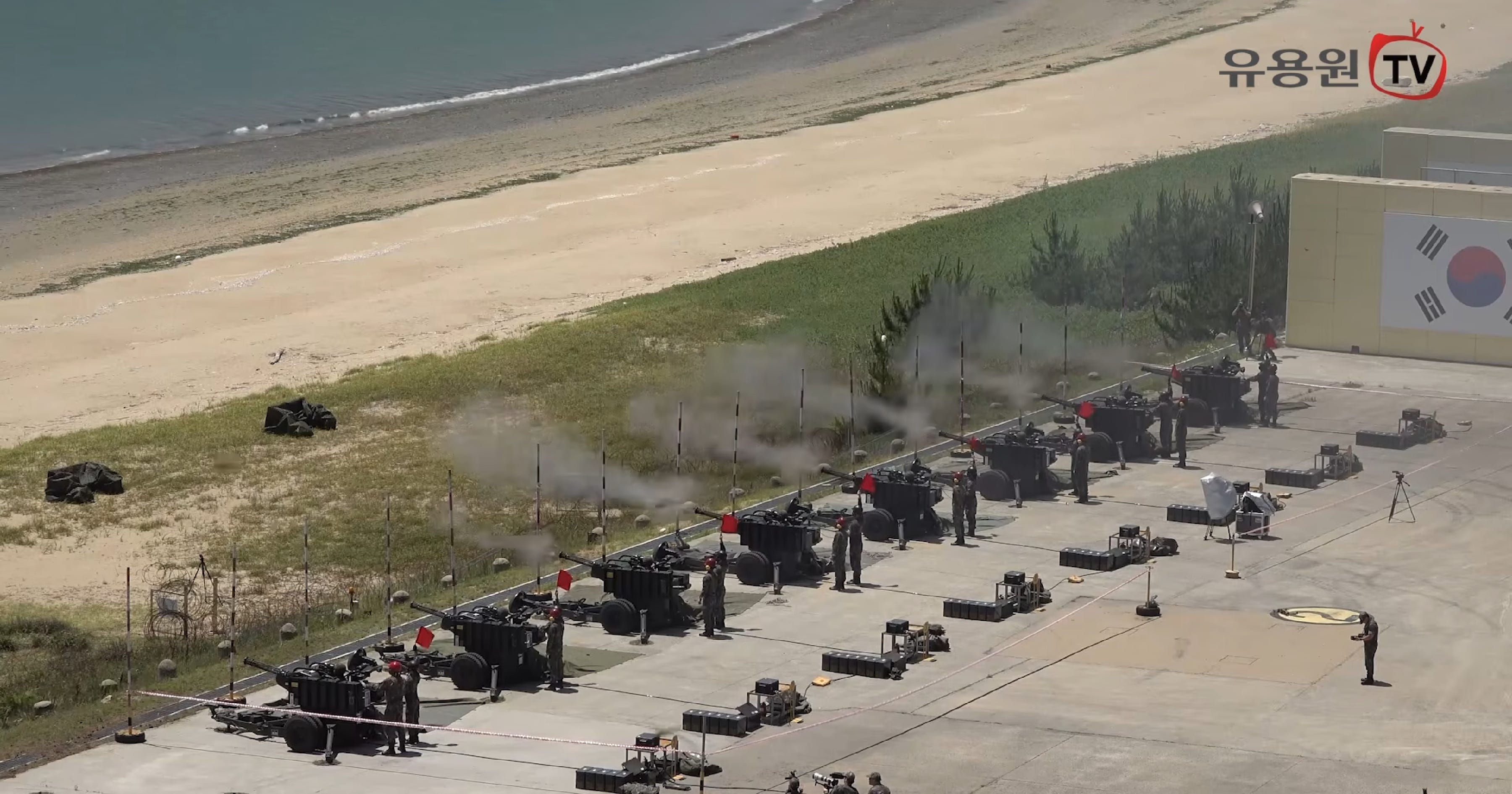
On the 23rd of June, 2026, the Republic of Korea (ROK) Air & Missile Defense Command conducted a counter-unmanned aerial system (C-UAS) exercise with 20mm M167 Vulcan Air Defense Systems. It was proudly filmed and posted on the YouTube channel of a current Korean National Assemblyman who sits on the National Defense Committee.
The video shows a battery of eight M167 Vulcan Air Defense Systems firing at a “swarm” of stationary quadcopter drones. Shown as an anti-drone swarm exercise, this highlights once again how even seemingly technologically advanced militaries, such as the Republic of Korea Armed Forces, are slow to adapt to the current battlefield meta, and even then, are adapting in all the wrong ways.
The Gun is Older Than Your Sergeant Major
The M167 Vulcan Air Defense System (VADS) was developed by the U.S. Army in 1965 as a short-range anti-aircraft gun. Initially designed to shoot down big aircraft flying predictable trajectories and dropping unguided munitions at low altitudes, it was withdrawn from active service by the U.S. Army in 1994.
Widely exported, with South Korea producing over 150 units under license, it is still operated by a dozen countries, including Korea, Japan, and Israel. Essentially a wheeled 20mm M61 cannon, modern variants come with improved fire-control systems, radar, thermal imaging sensors, and laser rangefinders.
It has had exceptionally wide deployment in South Korea in its Demilitarized Zone (DMZ), where they watch for throngs of low-flying An-2 biplanes and paragliders delivering special ops soldiers on what are essentially suicide assault missions. In 2019, the ROK armed forces fitted the VADS with thermal sights to counter these threats and the rudimentary drones that were crossing over for reconnaissance missions.
It was never intended to be an agile anti-drone, anti-missile platform.
Just Stay Still, So I Can Shoot You
In a training exercise clearly dreamt up by literal generals in armchairs, the video in question shows a battery of eight M167 lined up within 2 metres of each other, firing at a swarm of 38 small quadcopter drones, commonly used as one-way First-Person View (FPV) drones. The drones themselves are stationary in the air, tightly clustered in formation, with individual red beacon lights on, during midday, in clear skies. Only 9 out of 38 drones are downed in the 2-second volley.
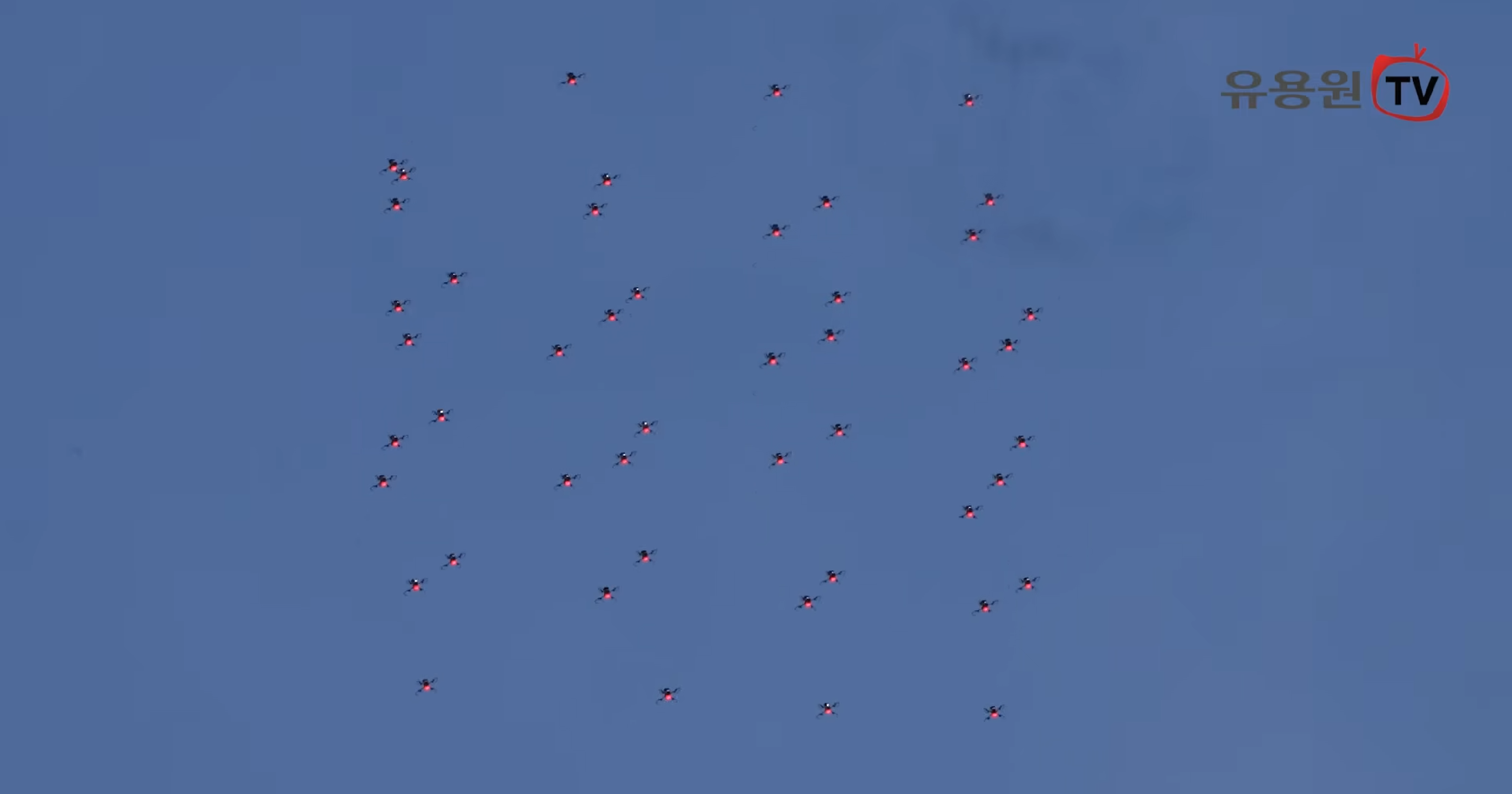
At a conservative 1,000 rounds per minute (the Vulcan can fire up to 3,000 rounds per minute), fired for 2 seconds, that was 266 rounds fired by a total of 8 systems. That is 30 effective rounds fired per downed drone for a 23% kill rate. Keep in mind that the drones were stationary, clustered in formation, had individual beacon lights on, during day time, in clear skies and the Vulcans had plenty of time to acquire the targets before firing. Hardly a realistic scenario.
Well, They Were Drones, Weren’t They?
Anyone with a moderate amount of knowledge of current UAS warfare would be able to tell you that in a real-world scenario, this closely positioned, unconcealed battery would be wiped out clean by a swarm of 38 FPV drones, and then some. This exercise had zero bearing on any credible C-UAS capabilities.
The Vulcan was never meant to be an anti-drone system, especially the small, fast quadcopters used in the exercise. Perhaps it can be used against bigger and slower winged UAS such as Shaheds, but with the current variants, it cannot track FPV drones fast enough, it cannot acquire FPV drones, especially wired ones, and it cannot accurately and meaningfully engage FPV drones. It takes 5 minutes to reload after its 1,100-round drum is depleted (usually in under 20 seconds). The idea of pairing the Vulcan and FPV drones for an anti-drone swarm exercise reveals a true lack of understanding of modern UAS warfare.
I Tried So Hard and Didn’t Get Very Far
It is incredibly disheartening to see this lack of awareness from the ROK Air & Missile Defense Command. It is difficult to comprehend that even a technically advanced military like the ROK Armed Forces struggles to understand UAS operations, but the problem runs deeper than a single failed C-UAS exercise. It points to a disconnect, especially at the leadership level, between how the battlefield is evolving and how doctrine is being adapted by the military establishment.
It certainly is not from lack of trying: Korea set up its joint Drone Operations Command in 2023 to specifically apply the knowledge gained from current conflicts into forming a coherent C-UAS doctrine within the ROK Armed Forces.
In addition, Korea is a powerhouse of industry - it boasts a robust military-industrial base and is a leading exporter of arms. Domestic Korean companies produce everything from ships to missiles, chips to software.
There is even huge political willpower to get with the times regarding drone warfare - in September 2025, the ROK Ministry of National Defense (MND) announced plans to train 500,000 “drone warriors” and procure more than 110,000 drones. The National Assembly has generously increased funding for the programme by more than 50% of the initial budget request to a total of £17 million ($22 million) in 2026.
This, however, is still not enough.
Who Would Have Known
While their intentions may warrant praise, the Ministry and the Armed Forces did not anticipate the manpower and the industrial base required to train 500,000 “drone warriors” and manufacture 110,000 drones. Chronic manpower shortages due to the shrinking population in Korea has affected the military, and the ROK Armed Forces are struggling to find anywhere near enough manpower to plan for and train 500,000 troops in modern drone warfare.
Additionally, there is very little awareness amongst the leadership of what is actually needed for a “blue” industrial base and supply chain for the manufacture of drones to be used in warfare. A “blue” industrial base or supply chain refers to one built exclusively from domestically sourced or trusted allied-nation components, free from adversarial foreign manufacturers. While Korea is a global leader in the manufacture of many military platforms and equipment, the mass manufacture of military drones with a “blue” supply chain and components is not one of them.
Under current Korean law, “large enterprises” are excluded from bidding for government contracts regarding drones under 25kg. As government contracts often require “blue” supply chains, the burden of creating a domestic “blue” supply chain for drones rests firmly on the shoulders of small and medium-sized enterprises (SMEs). However, Korean drone SMEs simply do not have the resources to create an entire domestic “blue” supply chain just to cater to government contracts. This has effectively completely killed the domestic drone supply chain before it even had a chance to grow.
The cold, hard truth is that most drone components - batteries, avionics, sensors, etc. - are far cheaper to buy from aboard. As civilian drones don’t require “blue” components, there isn’t enough industrial capacity in Korea to manufacture 110,000 “blue” drones, any amount of money notwithstanding.
This means that drones made from fully “blue” components have considerably longer lead times, and are several times more expensive. Consequently, this far exceeds the Ministry’s budget and timeline, even with the National Assembly’s generous raise.
All this points to either a fundamental misunderstanding of the current drone warfare paradigm, or a stubborn unwillingness to accept it, by the Korean military leadership. These issues cannot be solved by simply pouring money into more people and more drones. This is yet another indication that national militaries are still grappling with the reality of drone warfare on today’s battlefield.
How Many Times...?
The form of modern warfare is changing rapidly, in Ukraine and in the Middle East alike, but whether the necessary lessons have been absorbed, is doubtful. With reconnaissance drones, mobile phones, and now, actual FPV drone footage, the realities of the battlefield have never been clearer and more accessible. With 3D printing, rapid prototyping, and AI-led manufacturing techniques, it has never been cheaper, faster, and easier to create new systems to adapt to a fast-changing battlefield. And yet, almost every single modernised national military seems to be struggling to adapt to and prepare for the modern day battlefield.

If a technologically advanced military like Korea’s, with a robust industrial base and heavily pro-military political will, struggles to update their strategy and doctrine, then what about the UK? What about Europe? While the leadership fails to absorb the lessons being learnt, the brunt of that responsibility falls, unfairly, to those who are fighting at the front lines, and those who are building the equipment being used there. There, the call is crystal clear - adapt, or die.
Thank you for reading. We always welcome fresh perspectives and new contributions. If you are interested in writing for the Fox and Lion or have a piece that you would like to publish with us, please feel free to email us. We warmly welcome active and former servicemembers, and members of the defence tech community. Additionally, if you are hiring, email us to get your job featured in our next Defence Tech Jobs newsletter.