
The Kill Chain Has a Thinking Problem
Speed is not the bottleneck in modern command. Judgement is.

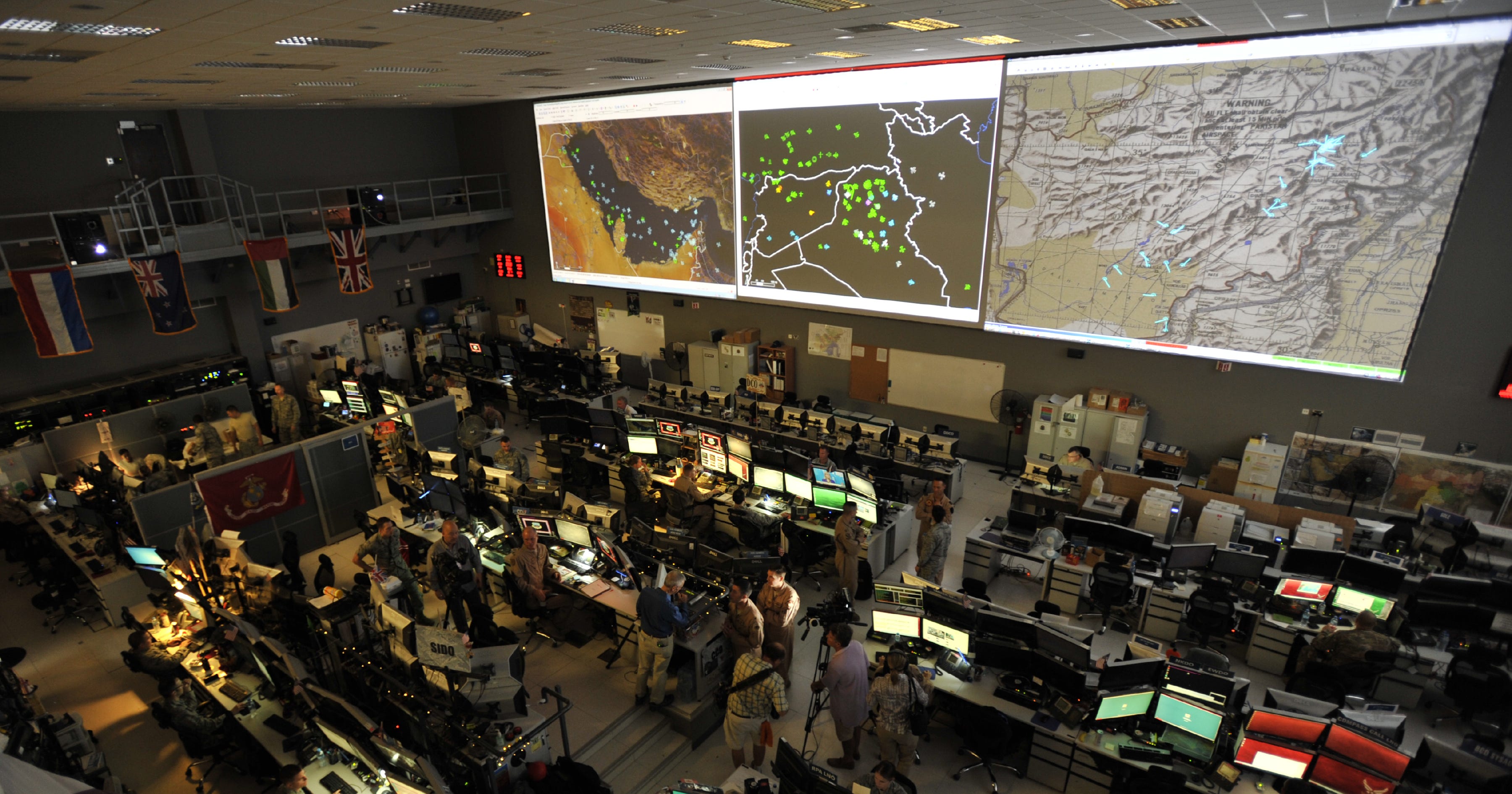
Moltke is often reduced to a single line: “No plan survives contact with the enemy.” The tacit admission behind it: the battlefield cannot be predicted or controlled, only navigated.
The central vulnerability in the modern kill chain is not sensor range or data throughput. It is the moment when information becomes a valid basis for action. A system can be fast, and apparently confident, while the ground on which that confidence rests is still degraded, incomplete, or contested.
This gap matters.
The Clock Has Changed
The logic Moltke pointed toward later crystallised as Auftragstaktik: commanders express intent, subordinates decide method. The space between is filled with judgement. That logic has not disappeared, but the clock it runs on has changed in ways not fully reflected in modern-day doctrines.
Across multinational exercises, the same pattern appears. Systems are connected. Data is transmitted. Decisions - still arrive late. The cause is usually not a failure of interface, it is a mismatch of tempo. Command structures operate on one tempo, the operational environment moves on another.
The window between sensing, interpreting, deciding, and acting has compressed to seconds. NATO interoperability has improved how systems talk to each other, but it has not changed how people think. Data flows across coalition networks - while humans interpret the same picture through different mental models, different national constraints, and different institutional habits.
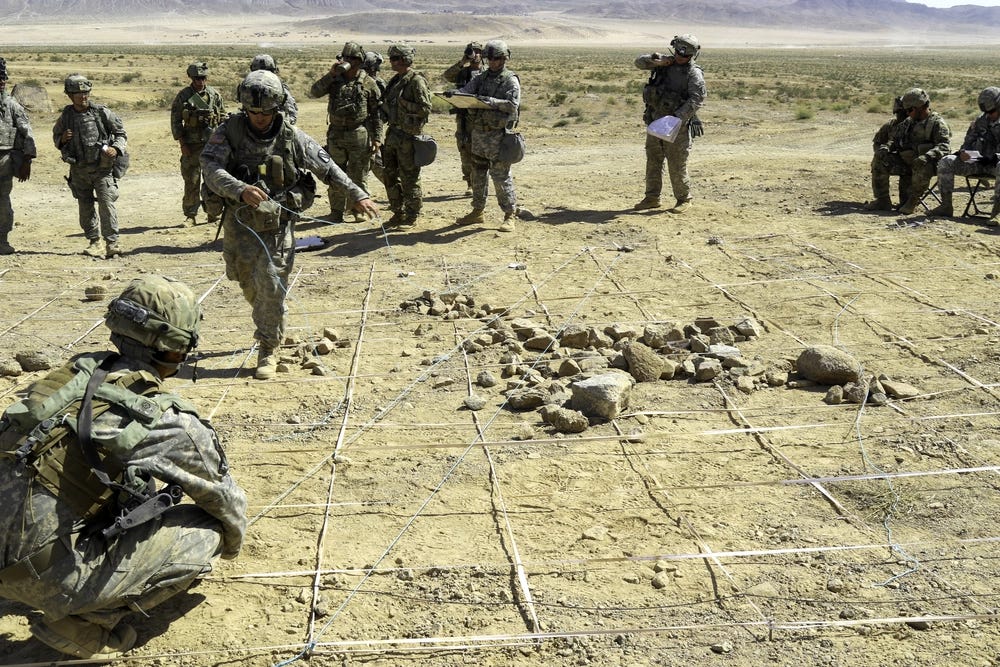
This is not a new problem. Before digital solutions arrived, armies used something much simpler: a rock drill. Commanders moved stones in the dirt to build a shared picture before the fighting started. This was not just primitive visualisation, it was a tool for aligning decision-making under pressure. Stones and dirt were just the medium. The problem it addressed persists.
Autonomy Improves Execution. It Does Not Replace Command.
When human cognition lags behind the battlefield tempo, the instinctive answer is to add sensors, accelerate processing, and push autonomy further to the edge. Cut the human out where latency appears to be the bottleneck.
That can indeed improve execution speed, but command quality is a different problem.
A more fundamental issue arises when several valid things are true at once. Sensor data, prediction models, command intent, coalition rules of engagement (ROE), and national caveats can all be valid, without pointing in the same direction. Under normal tempo, those differences can be resolved through coordination or escalation. Under compressed tempo, that window closes before a resolution is possible. Acting before loss of track may mean moving before identity is confirmed; clearing coalition authority may take longer than the tactical window allows.
Consider what this looks like in practice. A UAS feed drops, but the telemetry remains active. An EW system reports effect achieved, but no command node has confirmed authority over the next action. A model predicts target movement, but ROE still requires positive identification before action. Each input is valid, yet cannot be the sole basis for a decision. The decision problem is no longer speed, it is whether there is a sound enough basis to act at all, while the clock is counting down. Validity under compression.
Most current command architectures have no good way to make that kind of tension visible. Their instinct is to fuse: take multiple inputs and resolve them into a single, cleaner picture. That is genuinely useful, most of the time. The problem arises when the conflict is not between competing data points but between competing valid obligations.
A system built around fusion will still produce an output, but to do that, it must resolve those tensions somewhere. It usually does so silently, without flagging which obligation was deprioritised or giving the commander the chance to make that call deliberately.
The conflict does not disappear. It just gets buried.
The Missing Layer
There is a layer missing between machine action and command intent. It is not hard to describe, though it is difficult to build. It needs to keep conflict visible before the system turns it into a single, clean, and possibly false answer. It needs to show which truths are in play, where they conflict, what each course of action costs, and who has authority to move next, given current conditions. This is what a sound decision basis looks like.
That shift must be dynamic. In a five-second decision cycle, rigid hierarchical authority models produce the exact latency they were designed to prevent. That is not an argument for removing the human. It is an argument for making sure the human can see, clearly and in time, whether the basis for a decision still holds.
Architecture Is Now Decision Authority
Mission command rests on an assumption that is rarely examined: that human understanding persists across time. Intent, once shared, stays shared. Commanders carry in their heads why a decision was made, what risk was accepted, what remained uncertain, and who owned the next move.
However, modern systems do not work that way. They recompute state. Every cycle, the operational picture is rebuilt from current inputs. Context that a human treats as inherited knowledge must be reconstructed by the system - or lost. Translating a framework built on cognitive continuity into one built on stateless recomputation is not just a design challenge. It is a category mismatch. Expecting consistency will produce failures that look like bugs, but are something much more fundamental.
This is where architecture begins to shape authority in ways that go beyond engineering choices. Latency budgets, edge execution rules, arbitration logic, data freshness thresholds, confidence windows, authority handover protocols: in a compressed operational environment, these are not technical parameters. They define what can still be checked, what can be trusted, what gets handed off automatically, and what disappears from human judgement before the commander can intervene.
Architecture, in other words, has become decision authority.
The failure point under pressure is rarely the individual component. It is the transition between components: sensor to model, model to recommendation, recommendation to commander, commander to coalition constraint, coalition constraint to action. Each transition carries the risk of losing context, misrepresenting confidence, or silently transferring authority in ways neither the system nor the commander has explicitly sanctioned.
Who Defines the Logic First
Sensor fusion, battle management software, autonomy orchestration, and mission systems integration already operate in this space. However, they are adjacent to the core problem rather than solving it. Integration defines how systems communicate. Decision coherence defines the basis for action.
The real transition underway is not from analogue to digital, it is between competing models of what makes a decision valid in the first place. It is an issue that neither faster tools nor smarter models alone can resolve.
What we need is a layer that does not command platforms, replace human judgement, or force every input into a single answer. It needs to do three things: show when the decision basis has degraded, preserve conflicting inputs rather than hiding them inside a clean output, and identify who should act next.
This is no longer a command theory problem. It is an implementation problem. The question is not whether this layer is necessary. It is who defines its logic first.
Whoever does, will define modern command.
Won Yi is a Berlin-based former Republic of Korea Army officer working on mission software, command architecture, and decision validity across C2/C4ISR systems and environments. His background spans digital transformation, IT M&A, venture-backed software, and technology partnerships across Europe and Asia.
Thank you for reading. We always welcome fresh perspectives and new contributions. If you are interested in writing for the Fox and Lion or have a piece that you would like to publish with us, please feel free to email us. We warmly welcome active and former servicemembers, and members of the defence tech community. Additionally, if you are hiring, email us to get your job featured in our next Defence Tech Jobs newsletter.
 | A guest post by
|