
Pulling 5,000 Troops from Germany Is Not a Big Deal
The U.S. military has been reducing its European footprint since 2013, and with Russia rearming and NATO under pressure, Europe is running out of time to close the gap

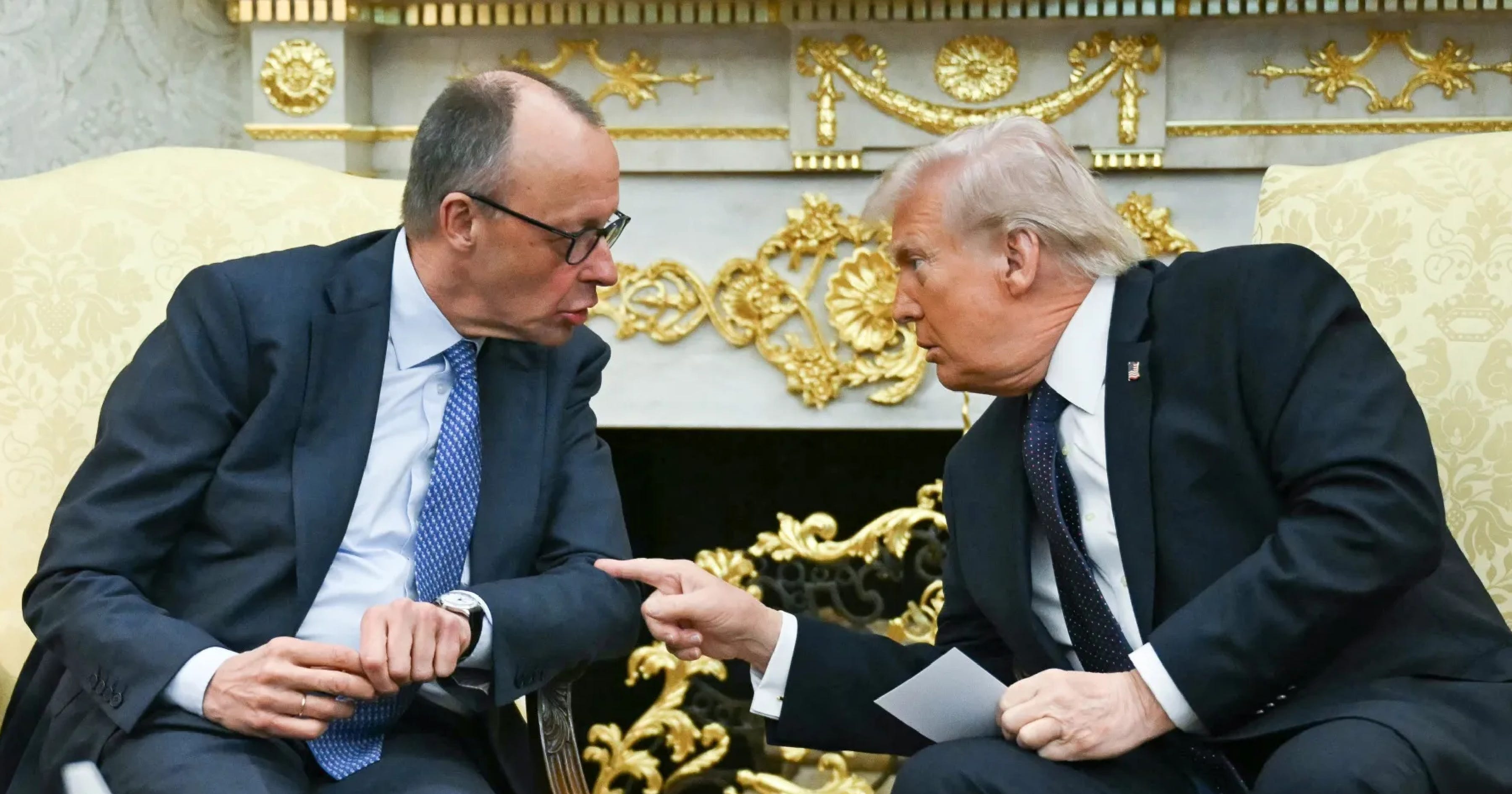
The U.S. recently announced that it would withdraw approximately 5,000 troops from Germany over the course of the next year. The media did not hesitate to point fingers at President Trump’s supposed feud with German Chancellor Merz, but is that really the whole picture?
Mr Merz himself has denied any direct connection, and actually, he’s right. This removal of 5,000 troops, while not officially confirmed by the Pentagon, is roughly equivalent to the size of an Armored Brigade Combat Team (ABCT) – and the removal of a single ABCT would merely leave the U.S. military presence in Germany a similar size to its force posture before Russia’s full-scale invasion of Ukraine. In short, not much has changed, when you look at the numbers.
However, what can be said for certain is that this change has been part of a larger trend of U.S. deterrence policy for over a decade. A trend that has larger implications for the state of European security in general – and one that’s been a long time coming.
Ten Years in The Making
During the Cold War, the U.S. positioned massive numbers of troops in Europe, at times up to 6,000 tanks. These numbers dropped, understandably, after the dissolution of the USSR, but until 2012-2013, when both were deactivated, the U.S. maintained two Heavy Brigade Combat Teams (the previous iteration of the ABCT) in Germany.
In 2013, as part of a 16% reduction to the end strength of the U.S. Army, President Obama replaced the armoured units in Europe with rotational “Regionally Aligned Forces (RAFs)”. RAFs, which are deployed into and out of Europe every nine months, generally consist of one ABCT, one Combat Aviation Brigade (CAB), and one sustainment task force.
Other drawdowns are occurring in Europe, not just Germany: as recently as October 2025, the US military announced a drawdown in Romania, reducing the number of US troops to around 1,000. As to the most recent drawdown, German Minister of Defence Boris Pistorius has emphasised that the move did not come as a surprise, saying that it was “expected”. That this is in line with longtime U.S. military policy would make more sense than the sensationalised line that Mr Trump is pulling troops as a petty comeback against another world leader.
Well, for One Thing No Bear Claws
Yes, the escalation of the Russo-Ukrainian war into a full-scale invasion did indeed lead to a temporary increase in U.S. military forces in Europe to include an additional ABCT and an Infantry Brigade Combat Team (IBCT, recently motorised and reflagged as Mobile BCTs), as well as a variety of enablers and headquarters.
However, four years on, the threat from Russia is nowhere near what it was. Over the course of the war, Russia has suffered at least a million casualties, not to mention similarly staggering losses of equipment, and the crippling of its Black Sea Fleet. Here are the Ukrainian estimates:
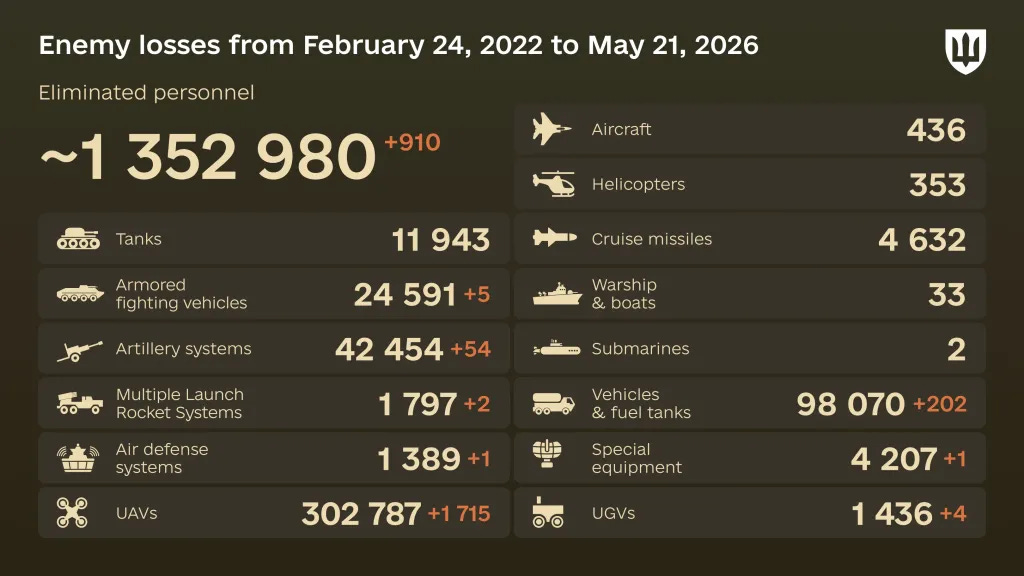
The Russian threat to Europe, at least for the near future, is significantly less, thanks mainly to the valour, dedication, and grit of our friends in Ukraine. While still dangerous, Russia is seriously weakened.
The threat of Russia now – temporarily – neutralised, the U.S. is focusing its defence efforts on more pressing security concerns elsewhere. Current events show that the Middle East will continue to matter, and China is the pacing competitor for the U.S.
Like Butter Scraped over Too Much Bread
While theoretically the elimination of permanently stationed armoured troops in Europe in favour of a rotation system should be easier and cheaper, it cannot be further from the truth. Rotational deployments have taken a heavy toll on the U.S. military, hindering modernisation, impacting mental health, and costing more money than they should.
Modernisation should be a priority, but a brigade that spends nine out of every 27 months forward deployed on austere bases conducting, at best, varying amounts of training with similarly varying quality, not to mention seven to eight months of those 27 spent packing, shipping, and unpacking equipment, is not laser-focused on modernisation and transformation. And this only scratches the surface of the other requirements, personnel changes, and disruptions these units face.
The impact on job satisfaction, mental health, and retention is grisly: between 2019 and 2021, soldiers in ABCTs were more than twice as likely to commit suicide than the average rate across the U.S. Army, and tank crewmen, specifically, were almost three times as likely.
The rotation system is not saving anyone money either. RAF deployments actually cost more in dollars than stationing forces overseas, which is absurd if you think about it – reduced deterrence and readiness for more money.
It takes rose-tinted glasses to believe that RAF deployments have increased readiness, strategic flexibility, and security, and have done so at an acceptable cost. The bottom line: when the U.S. says, and has said for decades now, that it cannot bear the cost of defence for the entire free world, it is not exaggerating.
What This Means for Europe
Rest assured that the critical infrastructure of NATO will remain – the U.S. and Europe both gain too much from this network to walk away from this alliance. The U.S., a continental island that must project power, benefits from NATO’s network and facilities; NATO offers Europe direct security benefit and informal influence.
That said, the situation is clear: there is an imperative for European nations to step up to the security (and sovereignty) challenge. In the vacuum, left by a U.S. that cannot be everywhere at once, exists an opportunity.
This opportunity presents itself in an increasingly unstable world. Russia, Europe’s main threat, will rearm. Whether the Ukrainian war “ends”, or merely settles into an uncomfortable stasis – they will rearm. More importantly, Russia is unlikely to suddenly experience a Damascene conversion and give up its centuries-old habit of bullying its smaller neighbours and seeking to extend its power into the heart of Europe and the surrounding seas. Recent efforts to break through the GIUK anti-submarine barrier reinforce the notion that Russia is preparing for a prolonged conventional conflict with NATO.
We Live in a Society
The most recent reduction in American forces in Europe is not a rupture with the U.S. Even if we are grumbling and hissing and hectoring each other a bit more at the moment, there really still is a “free world”. But even if this drawdown is more bark than bite, it is another spur in Europe’s side, urging it to strengthen its focus on strategic autonomy.
Europe, as much as it has believed (or hoped) it may be, is not disconnected from the possibility of war, nor of great power competition. It is time to face this reality and act – and the first step is to reclaim sovereignty over its own defence.
CPT Francis Ambrogio is an armour officer in the U.S. Army, stationed in Bavaria. He is a graduate of the U.S. Military Academy at West Point and has served in a variety of armoured and light/mountain formations in the U.S., Asia, and Europe.
The views and opinions presented here are those of the authors and do not necessarily represent the views of the U.S. Army, the U.S. Department of Defense, or the U.S. government.
Thank you for reading. We always welcome fresh perspectives and new contributions. If you are interested in writing for the Fox and Lion or have a piece that you would like to publish with us, please feel free to email us. We warmly welcome active and former servicemembers, and members of the defence tech community. Additionally, if you are hiring, email us to get your job featured in our next Defence Tech Jobs newsletter.
 | A guest post by
|